

Maintenance Guide
A practical guide to routine maintenance, with service recommendations matched to your vehicle, mileage, and driving habits.
When should I service my vehicle?
Your Maintenance At a Glance

Oil changes, filters, tire care, and fluid services all have a place in your maintenance plan. We review your service history and manufacturer’s schedule to help you understand what’s due now and what can wait.
Start with your vehicle’s schedule. These mileage ranges are general planning guidelines, not universal factory intervals. Follow your owner’s manual or service reminder, including any time limit, whichever comes first.
Oil & Filter Change
5,000 miles
Some vehicles specify longer or shorter intervals. Follow the required oil specification, service reminder, and time limit.
Tire Rotation
5,000–7,500 miles
Use the vehicle and tire maker’s guidance. Rotation options depend on your tire sizes and fitment.
Engine Air Filter
10,000–15,000 miles
Replace according to the manufacturer’s schedule and filter condition; dusty driving may require earlier attention.
Cabin Air Filter
10,000–15,000 miles
Replacement timing varies by vehicle and exposure to dust and pollution.
Brake Inspection
At scheduled maintenance visits
Inspect wear and condition. Pads and rotors are replaced based on findings, not a fixed mileage alone.
Battery Check
At routine maintenance visits
Check battery performance and connections; replace based on testing and condition.
Brake Fluid Service
Every 30,000 miles
Some vehicles specify a three-year interval. We confirm the requirement for your make and model.
Coolant Service
Every 30,000 miles
The coolant type and vehicle schedule determine when it is due. The first and later intervals may differ.
Transmission Fluid
30,000–60,000 miles
Service timing and procedure depend on the transmission and how the vehicle is used.
Spark Plugs
60,000–80,000 miles
Plug type and engine requirements determine the interval. Check running problems when they occur.
Drive Belt
60,000–80,000 miles
Check the belt and related components for wear; replace as scheduled or when inspection shows a need.
Timing Belt
60,000–90,000 miles
Applies to engines with a timing belt. Timing chains do not use the same replacement schedule.
Quality parts. Correct fluids. We use OEM or OE-equivalent parts for maintenance and repairs. For American and German vehicles, we use Liqui Moly engine oil selected to meet the required specifications.
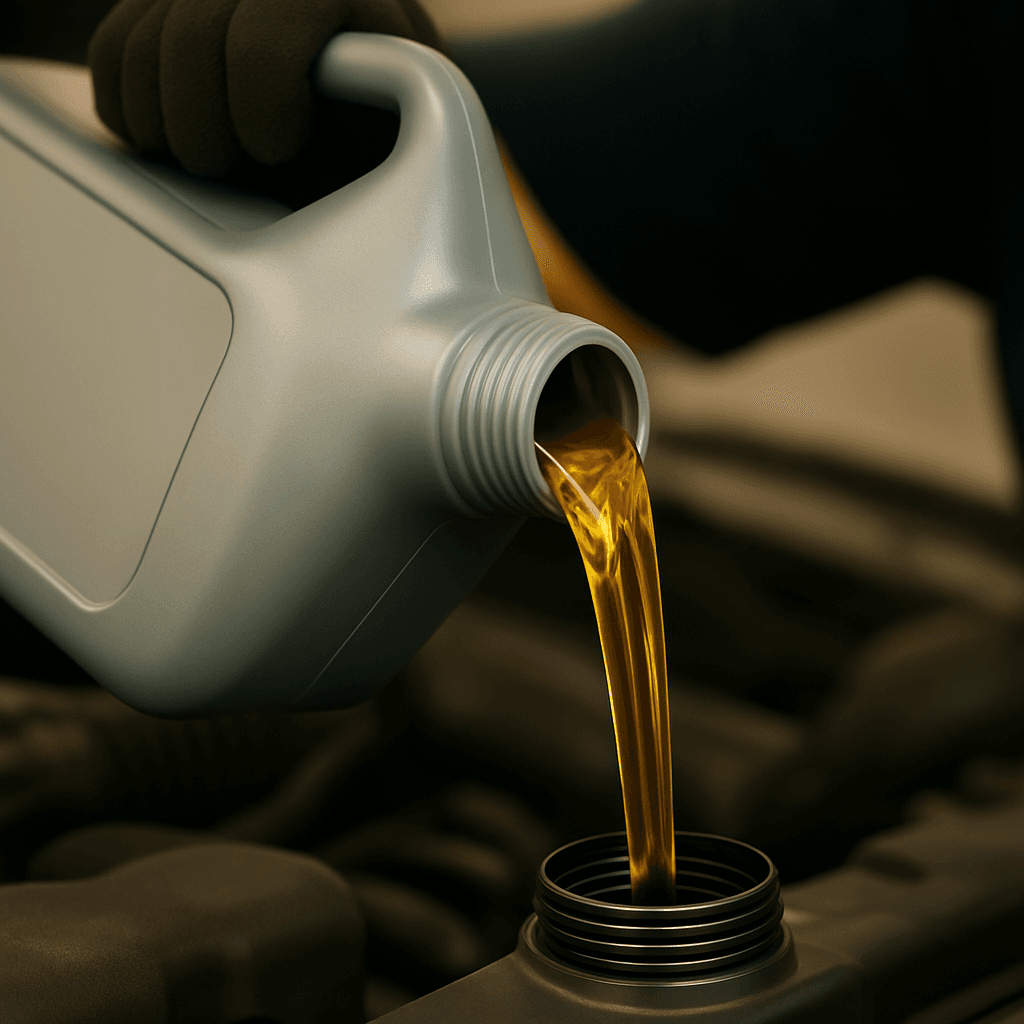
A closer look at oil changes
When should you change your oil?
For many vehicles, 5,000–7,500 miles is a common reference range. Your actual interval comes from your vehicle’s requirements and how you drive.
01Check mileage and time
Low mileage doesn’t automatically mean the oil can stay in indefinitely. Follow the manufacturer’s time limit as well as mileage.
02Use the right oil
Oil viscosity and required approvals matter. Using synthetic oil does not, by itself, extend your vehicle’s specified interval.
03Account for driving conditions
Short trips, heavy idling, towing, or dusty conditions may change the service schedule. We help check the guidance that applies to you.
A few common questions
No. Some reminders cover inspections, tire rotations, or other services. We check the specific message and your maintenance history before recommending work.

Let’s check what’s due.
Have your year, make, model, mileage, and last service date ready. We’ll help you plan the next step.
Call 610-570-8200The Garage · Allentown, PA
Complete auto care. Clear answers.